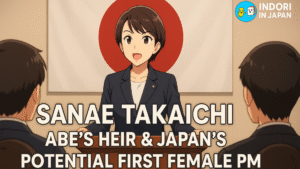
Sanae Takaichi India Visit Highlights: Special Strategic and Global Partnership (India-Japan Annual Summit 2026)
皆さん、こんにちは!(Hello everyone!)
Hey everyone, Akash here. If you have been following my journey from Indore to Osaka and now living and working in Japan, you already know that the India-Japan bond is not just some faraway diplomatic headline for me. It is the very bridge I cross every single day, between the country that raised me and the country that adopted me. So when Japan’s first female Prime Minister, Sanae Takaichi, landed in New Delhi for her maiden official visit to India from July 1 to 3, 2026, I was glued to every update like it was the finale of my favourite anime.

This was the 16th India-Japan Annual Summit, and honestly, the outcomes were bigger than anything I have seen in the years I have spent explaining Japan to Indians and India to Japanese people. So grab your tea or matcha, because I am going to break down every single highlight of this visit, why it matters for the Special Strategic and Global Partnership, and most importantly, what it actually means for folks like us living between these two worlds.
Why This Visit Was a Big Deal
Let me set the stage first. India and Japan upgraded their relationship to a “Special Strategic and Global Partnership” back in 2014, and since then the two countries have been stacking layer upon layer of cooperation, from bullet trains to semiconductors to defence exercises. Takaichi’s visit came at the invitation of Prime Minister Narendra Modi, and it followed Modi’s own trip to Tokyo in August 2025 for the 15th Annual Summit, where the two leaders had launched the India-Japan Joint Vision for the Next Decade.
What made this 2026 summit extra special was the timing. The world is dealing with protectionism, supply chain disruptions, and geopolitical tension, and both leaders made it clear that India and Japan see each other as the answer to building something more resilient and autonomous. Takaichi even coined a phrase for it: “Growing Stronger and More Prosperous Together,” built on the twin principles of autonomy and resilience, which she said aligns closely with Modi’s MAHASAGAR initiative.
And here is a sweet personal touch. During the joint press statement, Modi welcomed her with the words, “Excellency and my younger sister, Prime Minister Takaichi.” That kind of warmth is exactly what makes this partnership feel less like a transaction and more like a family bond, something I personally relate to as someone who has been welcomed into Japanese society with similar warmth.
Bilateral Talks at Hyderabad House
The leaders held a small-group restricted meeting that started at 11:30 AM and ran for about 60 minutes, followed by a plenary meeting of roughly 30 minutes. The agenda covered the full spectrum: trade, investment, economic security, supply chain resilience, defence, technology, innovation, and people-to-people ties.
Foreign Secretary Vikram Misri later described the visit as a significant step in strengthening the Special Strategic and Global Partnership, and he highlighted a few headline numbers that made me sit up straight. The two sides agreed to cooperate on establishing 1,000 biogas plants across India using Japanese technology, identified artificial intelligence as a flagship area for future collaboration, and rolled out the Economic Security Factsheet 2.0 to deepen business collaboration.
Modi, speaking later at the India-Japan Joint Economic Forum, made an ambitious pitch: he urged businesses to ensure that Japanese investment in India exceeds 10 trillion yen over the next decade and that the number of Japanese companies operating in India doubles during the same period. He reminded the audience that India remains the world’s fastest-growing major economy, with GDP growth of 7.7 per cent in the last financial year, and he credited Japan’s Kaizen philosophy of continuous improvement for helping transform India’s economic DNA over the past 12 years.
Takaichi, for her part, stressed that Japan and India, as two of the region’s largest democracies, would further strengthen cooperation to uphold the rule of law, resist coercion, safeguard freedom, and promote prosperity. She described energy security as one of the most important pillars of the bilateral partnership.
The 16 Key Outcomes and Agreements at India-Japan Annual Summit
This is the part where the visit goes from “nice speeches” to “actual signed paperwork.” The Ministry of External Affairs and the Prime Minister’s Office released a list of 16 outcomes, spanning crucial operational sectors:
- India-Japan Joint Declaration on Economic Security — This promotes project-based collaboration for joint resilience in semiconductors, critical minerals, ICT, including AI, clean energy, and pharmaceuticals. The accompanying India-Japan Fact Sheet 2.0 captures the growing government-to-government and business-to-business engagement in this space.
- India-Japan Joint Statement on Cooperation in the Field of Artificial Intelligence — This elevates the relationship to a strategic R&D partnership in AI, building on the existing India-Japan AI Initiative (JAI). The roadmap covers the entire AI technology stack with a shared vision of safe, secure, trusted, inclusive, and human-centric AI.
- Joint Statement on Energy Resilience — Signed between India’s Ministry of Petroleum and Natural Gas and Japan’s METI, this strengthens cooperation in strategic stockpiling and reserve mechanisms for crude oil and petroleum products, plus joint investments across the maritime energy transport value chain.
- Celebrating the 75th Anniversary of India-Japan Diplomatic Relations — Outlines a series of commemorative events to celebrate 2027 as the “India-Japan Year of Shared Horizons,” marking 75 years of diplomatic ties, with 10 commemorative programmes and a strong focus on youth participation.
- Memorandum of Cooperation for the India-Japan Cooperative Biogas for Growth (CBG) Initiative — Targets the establishment of 1,000 biogas and organic fertiliser plants across India, leveraging the extensive network of dairy cooperatives.
- MoC in the Field of Batteries — Aims to build a trusted, resilient, and sustainable battery supply chain through joint projects and expanded business opportunities.
- MoC in Pharmaceuticals and Medical Devices — Strengthens pharma supply chains, including Active Pharmaceutical Ingredients (APIs) and Key Starting Materials (KSMs), through bilateral investment, technical collaboration, and industry-academia linkages.
- MoC in Geology and Mineral Exploration — Strengthens upstream critical minerals exploration through exchange of technical expertise.
- MoC between IndiaAI Mission and METI Japan — Promotes institutional cooperation between IndiaAI Mission and Japan’s GENIAC initiative through B2B matchmaking, policy webinars, and joint projects with access to computing resources.
- MoC on Next Generation Mobility Partnership (NGMP) — Operationalises the NGMP announced at the 15th Summit, accelerating private sector cooperation in rail, automotive, aviation, shipbuilding, ports, logistics, and urban development, positioning India as a hub for “Make in India for the World” exports.
- MoU between C-CAMP and RIKEN — Establishes a framework for academic, translational research, and start-up-oriented innovation in deep-tech and life sciences, covering healthcare, agriculture, and the environment.
- MoU between NCBS-TIFR and RIKEN — Creates a framework for cooperation in basic biological and neuroscience research.
- MoU between IIT Bombay, BharatGen Technology Foundation, and NII Japan — Furthers collaboration on large language models, focusing on LLMs for enhanced scientific reasoning through joint research exchanges.
- MoU between SarvamAI and Preferred Network — Creates a framework for cooperation across the full AI technology stack, including foundation models.
- MoU between NIXI and JPNIC — Promotes cooperation in National Internet Registry operations, IPv6 adoption, internet security, capacity building, and exchanges on internet governance.
- Exchange of Letters between IFSCA and JFSA — Establishes a framework for cooperation in the development, regulation, and supervision of financial services, particularly in FinTech and RegTech.
Defence and Strategic Cooperation
Here is where things got genuinely historic. India and Japan announced their first-ever defence co-development project: the UNICORN (Unified Complex Radio Antenna) mast system for the Indian Navy. This advanced integrated mast improves a warship’s communication, radar, and electronic warfare capabilities while reducing its radar signature. Modi himself said this project “will open a new chapter in our defence technology partnership.”
This matters because until now, India-Japan defence cooperation was mostly about exercises, dialogues, and information sharing. Moving to actual co-development puts the relationship in a different league entirely. The broader defence architecture includes the Agreement Concerning Reciprocal Provision of Supplies and Services (AcSA) between Japan’s Self-Defense Forces and the Indian Armed Forces, which has been operationalised, plus joint exercises like Malabar, Dharma Guardian, and JIMEX, and an inaugural fighter exercise between the Japan Air Self-Defense Force and the Indian Air Force.
The two sides also confirmed that the fourth India-Japan 2+2 Ministerial Meeting of foreign and defence ministers will be held in Tokyo by the end of 2026, which means the strategic momentum is only going to keep building.

Economic, Technology, and Energy Partnerships
On the economic front, bilateral trade between India and Japan reached about USD 27.5 billion in fiscal year 2025-26, and Japanese investment in India totalled about USD 3.2 billion between April and December 2025. Japan has now set a target of investing 10 trillion yen (roughly USD 68 billion) in India over the next decade, and both sides aim to double the number of Japanese companies operating in India.
On technology, the Japan-India AI Cooperation Initiative (JAI) covers AI governance, safety, cybersecurity, digital infrastructure, semiconductors, and multilingual large language models. The MoUs involving SarvamAI, IIT Bombay, BharatGen, and Japan’s National Institute of Informatics and Preferred Network mean that Indian and Japanese researchers are now formally working together on building foundation models and LLMs, including models for scientific reasoning.
On energy, beyond the biogas initiative, the Renewable Energy Secretary Santosh Kumar Sarangi witnessed the signing of green hydrogen agreements between ACME Cleantech and Japanese companies. Tata Chemicals’ Managing Director R. Mukundan pushed for deeper cooperation in electric vehicles, green hydrogen, and battery storage. Japan also reiterated its support for India’s membership of the International Energy Agency, and both countries agreed to strengthen cooperation on strategic crude oil reserves and maritime energy transportation.
A fun industry moment: Haruyuki Hiratani, CEO of Future Creation Company, pointed out that Japan excels in mechanical engineering while India excels in information technology, and that closer collaboration could accelerate IoT development. There was even an agriculture angle. Hidetake Akiba, CEO of Akiba Farm Holdings, a company that has been farming in Japan for 140 years, said they have entered the Indian market and begun operations in Karnataka and Bengaluru, helping local farmers increase income and improve milk production through proprietary animal feed.
And of course, Modi and Takaichi jointly inaugurated Maruti Suzuki’s fourth vehicle manufacturing facility at Kharkhada in Haryana via video conferencing. Modi noted that nearly two-thirds of Suzuki cars sold globally are now manufactured in India and exported to more than 100 countries.
People-to-People and Diaspora Impact
The most exciting people-centric announcement around the summit was the Haryana-Fukuoka Connect 2026 programme. Japan’s Fukuoka Prefecture has partnered with Haryana to tackle a severe skilled worker shortage affecting about 80 per cent of its companies. Around 50,000 youngsters from Haryana could get jobs in manufacturing, semiconductors, automobiles, IT, healthcare, and hospitality in Fukuoka over the next five years. To prepare youth for these opportunities, the Haryana government will introduce Japanese language courses and industry-specific skill training in educational institutions across the state. A dedicated Haryana Sakura Working Group and a help desk have been established to support Fukuoka-based companies and institutions.
For someone like me who built a career on the back of learning Japanese and clearing JLPT N1, this is huge news. It means the path I scrambled to find on my own is now being formalised and scaled up by state governments.
More broadly, the Action Plan for India-Japan Human Resource Exchange targets exchanging over 500,000 personnel over the next five years, including 50,000 skilled workers from India to Japan, addressing Japan’s demographic challenges and fostering technological collaboration. There is also a specific goal to bring 500 highly skilled Indian AI professionals to Japan by 2030.
Japan’s Press Secretary Toshihiro Kitamura put it bluntly: both India and Japan are facing challenges from the weaponisation of economic relations, including difficulties in importing dual-use items from neighbouring countries, and the two nations have identified five priority areas for joint projects aimed at strengthening resilient and secure supply chains.
Historical Context and Future Roadmap
To really appreciate where this partnership is going, it helps to know where it comes from. India and Japan share a friendship rooted in spiritual affinity and civilizational ties going back to 752 AD, when Indian monk Bodhesena performed the consecration of the Great Buddha at Todaiji Temple in Nara. In modern times, figures like Swami Vivekananda, Rabindranath Tagore, JRD Tata, Netaji Subhas Chancellor Bose, Rash Behari Bose, and Justice Radha Binod Pal strengthened the popular imagination between the two nations.
The contemporary strategic architecture includes the 2008 Joint Declaration on Security Cooperation, the Comprehensive Economic Partnership Agreement (CEPA), the Mumbai-Ahmedabad High-Speed Rail project using Japan’s Shinkansen technology (with the latest E10 series planned for introduction in the early 2030s), the Lunar Polar Exploration (LUPEX) mission, and the India-Japan Clean Energy Partnership.
Looking ahead, the two countries will celebrate 2027 as the India-Japan Year of Shared Horizons to mark 75 years of diplomatic ties, with 10 commemorative programmes focused on youth participation. Takaichi has also invited Modi to Japan for next year’s annual summit, so the dialogue is locked in for the foreseeable future.
Stats at a Glance: Core Quantitative Metrics of the India-Japan Corridor
| Category | Detail |
|---|---|
| Visiting Leader | PM Sanae Takaichi (Japan's first female PM) |
| Visit Dates | July 1–3, 2026 |
| Summit Edition | 16th India-Japan Annual Summit |
| Total Signed Outcomes | 16 (Joint Declarations, Joint Statements, MoCs, MoUs, Exchange of Letters) |
| Bilateral Trade (FY 2025-26) | USD 27.5 billion |
| Japanese Investment in India (Apr–Dec 2025) | USD 3.2 billion |
| Japan's Investment Target in India | 10 trillion yen (~USD 68 billion) over the next decade |
| Japanese Companies in India | Target to double in the next decade |
| India GDP Growth (last financial year) | 7.7% (world's fastest-growing major economy) |
| Biogas Plants to be Set Up in India | 1,000 (CBG Initiative with Japanese technology) |
| Indian AI Professionals to Japan by 2030 | 500 highly skilled |
| Haryana-Fukuoka Job Target | 50,000 youth over 5 years |
| Fukuoka Companies Facing Skill Shortage | ~80% |
| Human Resource Exchange Target | 500,000 personnel over 5 years |
| Defence Co-Development Project | UNICORN naval mast system (first-ever) |
| Next 2+2 Ministerial Meeting | 4th edition, Tokyo, by the end of 2026 |
| Diplomatic Anniversary | 2027 = 75 years, "India-Japan Year of Shared Horizons" |
| Commemorative Programmes in 2027 | 10, with a focus on youth |
| Maruti Suzuki Plant Inaugurated | 4th unit, Kharkhada, Haryana |
| Suzuki Cars Made in India (global share) | Nearly two-thirds are exported to 100+ countries |
| Next Annual Summit | 2027, in Japan (Modi invited by Takaichi) |
Frequently Asked Questions
Q1. Who is Sanae Takaichi and why is her India visit significant?
Sanae Takaichi is the Prime Minister of Japan and the country’s first female head of government. Her July 2026 visit was her first official trip to India since assuming office, and it was for the 16th India-Japan Annual Summit. It is significant because it produced 16 signed outcomes spanning AI, defence, economic security, energy, mobility, and people-to-people exchange, and it set the agenda for celebrating 75 years of diplomatic ties in 2027.
Q2. What is the Special Strategic and Global Partnership between India and Japan?
It is the highest-level framework of bilateral cooperation between the two countries, established in 2014 during Modi’s visit to Japan. It elevates the relationship beyond a standard strategic partnership to cover defence, security, economic, technology, infrastructure, and people-to-people dimensions, with regular annual summits, a 2+2 foreign and defence ministerial mechanism, and institutional dialogues across sectors.
Q3. What were the major agreements signed during the visit?
The 16 outcomes included a Joint Declaration on Economic Security, a Joint Statement on AI Cooperation, a Joint Statement on Energy Resilience, the CBG biogas initiative for 1,000 plants, MoCs on batteries, pharmaceuticals, critical minerals, the IndiaAI-METI tie-up, the Next Generation Mobility Partnership, four MoUs on AI and life sciences research (involving RIKEN, IIT Bombay, BharatGen, SarvamAI, Preferred Network), an MoU between NIXI and JPNIC, and an Exchange of Letters between IFSCA and JFSA.
Q4. How does this visit impact the Indian diaspora and skilled workers in Japan?
Directly and substantially. The Haryana-Fukuoka Connect 2026 programme alone targets 50,000 jobs for Haryana youth in Japan over five years, with structured Japanese language and skill training. The broader action plan aims to exchange 500,000 personnel over five years, and a specific target of 500 highly skilled Indian AI professionals moving to Japan by 2030 has been set. More Japanese companies in India and more Indian professionals in Japan mean a thicker, more permanent bridge between the two societies.
Q5. What is the India-Japan Year of Shared Horizons in 2027?
It is the banner under which India and Japan will celebrate 75 years of the establishment of diplomatic relations. The two countries will organise 10 commemorative programmes with a strong focus on youth participation, cultural exchange, and people-to-people connectivity. It was formally announced as one of the 16 summit outcomes, and Modi has been invited by Takaichi to visit Japan for the next annual summit, which will likely feed into the 2027 celebrations.
Conclusion: Shaping the Next Decade Together
If I step back and look at this visit through the lens of someone who literally built a life and a career on the India-Japan bridge, the 16th India-Japan Annual Summit feels like a turning point. It is the moment when the relationship stopped being mostly about bullet trains and trade numbers and started being about co-developing naval technology, jointly building AI foundation models, sharing critical mineral supply chains, and sending 50,000 young Indians to work in Japanese factories and offices.
What stood out to me the most was not just the scale of the numbers, whether it is 10 trillion yen of investment, 1,000 biogas plants, or 500,000 personnel exchanges. It was the tone. Modi calling Takaichi his “younger sister,” Takaichi framing the partnership around “autonomy and resilience,” Japanese CEOs openly talking about complementary strengths with India, and a Haryana government setting up a Sakura Working Group to send its youth to Fukuoka. Every one of those moments tells me that the India-Japan story is moving from the conference hall into the classroom, the factory floor, and the family dinner table.
For those of us already living between India and Japan, this summit means the ecosystem around us is about to get a lot bigger, a lot more structured, and a lot more welcoming. For those still planning the journey, the doors just got wider, and the signposts got clearer. And for the partnership itself, with 75 years of diplomatic relations just around the corner in 2027, the best chapters are still being written.
That is all from me for now. Keep learning, keep exploring, and I will catch you in the next post.
— Akash, Indori in Japan.
✍️ Bonus: Need Help Starting?
✅ Job hunting tips and real listings for foreigners in Japan
✅ Visa guidance made simple—no confusing search
✅ Resume & cover letter templates (Japanese & English formats)
✅ Life in Japan explained — from rent to ramen
✅ Travel guides & city recommendations for every kind of explorer
✅ Work culture insights to help you adjust and thrive